
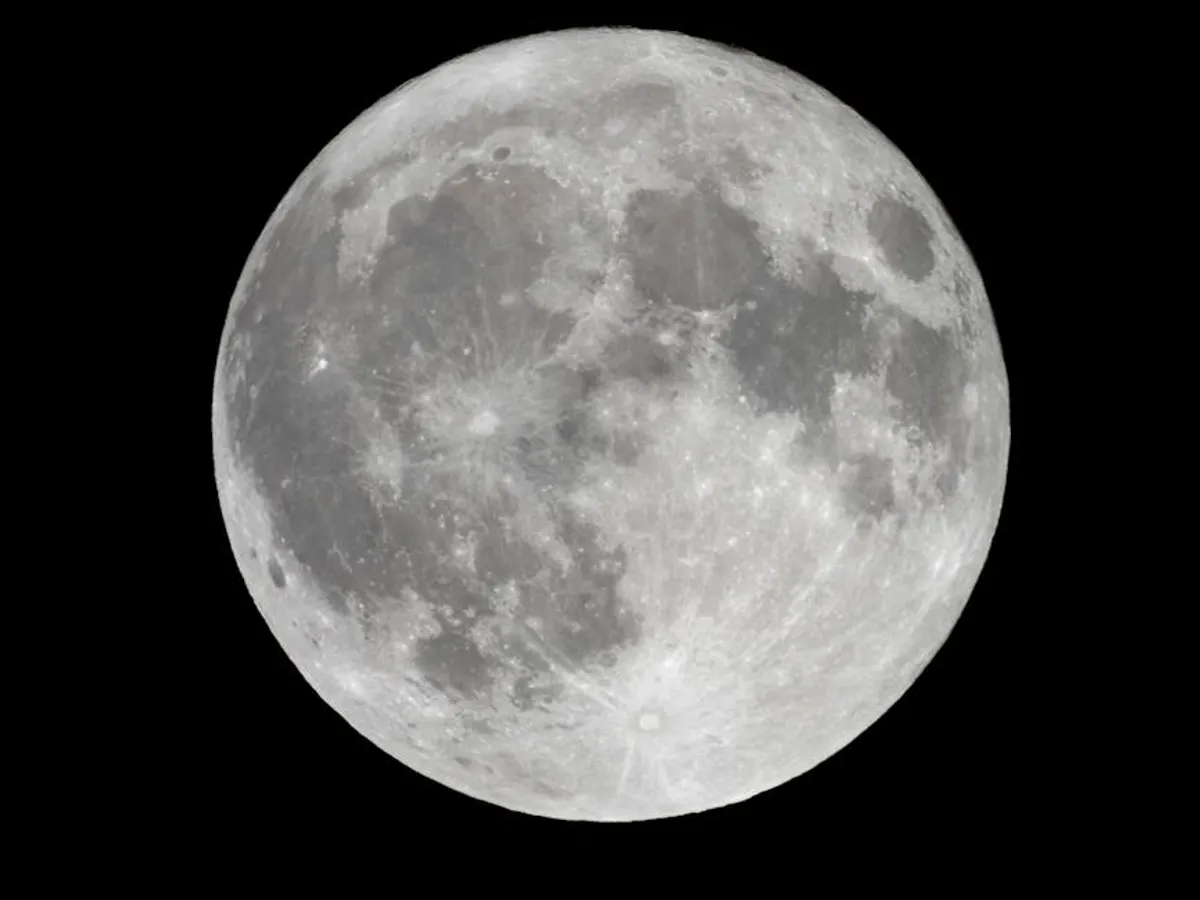
Understanding the precise timing of full moons in 2026 offers distinct advantages for strategic planning across various sectors. For content creators, marketers, and event organizers, a detailed full moon calendar provides a framework for seasonal campaigns, topical content development, and optimizing outdoor activities. This information supports content relevancy, audience engagement, and operational scheduling by aligning with natural cycles and widely recognized celestial events. This allows for better planning, especially if you need to know precisely when the next full moon occurs.
The Mechanics of a Full Moon
A full moon occurs when the Moon is positioned opposite the Sun in its orbit around Earth, resulting in its entire face being illuminated from our perspective. This alignment typically happens once per calendar month, though occasionally two full moons can occur within a single month (a "Blue Moon"). The exact moment of a full moon is when the Moon reaches 180 degrees ecliptic longitude from the Sun, a precise point in time that varies globally. For practical planning, knowing this specific time, often provided in Coordinated Universal Time (UTC), allows for accurate local time conversion and optimal viewing or planning.
Key Full Moon Dates for 2026
The following calendar details each full moon for 2026, including its traditional name and the exact moment of peak illumination in Coordinated Universal Time (UTC). Users should convert these times to their local time zone for accurate scheduling.
- January: Wolf Moon – January 13, 05:27 UTC
- February: Snow Moon – February 11, 19:35 UTC
- March: Worm Moon – March 13, 08:38 UTC
- April: Pink Moon – April 11, 20:07 UTC
- May: Flower Moon – May 11, 07:44 UTC
- June: Strawberry Moon – June 9, 18:29 UTC
- July: Buck Moon – July 9, 04:02 UTC
- August: Sturgeon Moon – August 7, 13:46 UTC
- September: Harvest Moon – September 6, 00:39 UTC
- October: Hunter's Moon – October 5, 12:47 UTC
- November: Beaver Moon – November 4, 02:49 UTC
- December: Cold Moon – December 3, 15:47 UTC
Significant Lunar Events in 2026
Beyond the monthly full moons, 2026 features specific lunar events that warrant attention for their visual impact and planning implications:
Total Lunar Eclipse (March 3, 2026): The Worm Moon in March will coincide with a total lunar eclipse. This event will be visible from parts of Europe, Africa, Asia, and Australia. For regions where it's visible, this presents a significant opportunity for photography, stargazing events, and content related to celestial phenomena. The Moon will pass through Earth's umbra, appearing reddish, a phenomenon often called a "Blood Moon."
Partial Lunar Eclipse (August 28, 2026): The Sturgeon Moon in August will feature a partial lunar eclipse. This eclipse will be observable from the Americas, Europe, and Africa. While not as dramatic as a total eclipse, a partial eclipse still offers unique visual interest as a portion of the Moon darkens. This can be leveraged for educational content or local observation events.
Strategic Applications for Marketers and Publishers
Integrating the 2026 full moon calendar into your operational strategy offers several concrete advantages:
Content Scheduling and Thematic Development: Plan articles, blog posts, or social media campaigns around the traditional names and associated folklore of each full moon. For instance, content related to agriculture or outdoor activities can align with the "Harvest Moon" or "Strawberry Moon." Wellness or spiritual content can leverage the reflective nature often associated with full moons. This provides a natural hook for timely and relevant content that resonates with audience interest spikes.
Event Planning and Promotion: Outdoor events, nighttime photography workshops, or community gatherings can be scheduled to coincide with full moon evenings, taking advantage of natural light. Promote these events using the specific moon names to create a unique selling proposition and draw attention.
Niche Marketing Opportunities: Industries like outdoor recreation, astronomy equipment, sustainable living, or even specific cultural markets can develop targeted campaigns. For example, a fishing gear company might highlight products around the "Buck Moon" or "Sturgeon Moon," linking to traditional hunting and fishing seasons.
Pro Tip: When planning content or events around full moons, always factor in local weather patterns and specific visibility conditions. While the astronomical event is precise, cloud cover or light pollution can impact practical application. Cross-reference with local meteorological forecasts for optimal execution.
Integrating Lunar Cycles into Your Workflow
Successful integration of the full moon calendar involves more than just knowing the dates. It requires forward planning and creative application:
- Annual Content Roadmaps: Plot full moon dates onto your yearly content calendar. Assign specific themes or content types to each moon well in advance.
- Social Media Engagement: Develop a series of posts, stories, or live events for each full moon. Use engaging visuals and prompts related to the moon's name or cultural significance.
- Email Marketing: Send out themed newsletters or promotions leading up to and on the day of a full moon, offering relevant products, services, or educational content.
- SEO Keyword Strategy: Research long-tail keywords related to each moon's name, cultural practices, or associated activities (e.g., "best camera settings for full moon photography," "gardening by lunar cycle March").
Maximizing 2026 Lunar Opportunities
The 2026 Full Moon Calendar serves as a practical resource for strategic planning. By understanding the timing and characteristics of each lunar event, including the significant eclipses, professionals can develop more resonant content, execute timely marketing campaigns, and plan engaging events. Proactive integration of these celestial rhythms into your annual strategy ensures relevance and provides unique angles for audience connection.
Frequently Asked Questions
What is the difference between a full moon and a new moon?
A full moon occurs when the Moon is fully illuminated by the Sun from Earth's perspective, appearing as a complete disk. A new moon, conversely, happens when the Moon is between the Earth and the Sun, making it appear dark or invisible from Earth as its illuminated side faces away from us.
Why do full moons have different names each month?
Traditional full moon names originated from Native American, colonial American, and European folklore, often reflecting seasonal activities, weather patterns, or agricultural cycles prevalent during that particular month. For example, the "Wolf Moon" in January refers to wolves howling outside villages during winter.
How do I convert UTC full moon times to my local time?
To convert UTC times, you need to know your local time zone's offset from UTC. For instance, if you are in Eastern Standard Time (EST), which is UTC-5, you would subtract 5 hours from the given UTC time. Always account for Daylight Saving Time if applicable in your region.
Can full moons affect human behavior or natural phenomena?
While often associated with folklore and anecdotal observations, scientific evidence for direct, widespread effects of full moons on human behavior is largely inconclusive. However, the Moon's gravitational pull does influence tides, and some studies suggest subtle impacts on animal behavior or sleep patterns, though these are typically minor.



